
The Cosmic Journey: Meteorit vs. Meteoroid Explained
This guide covers everything about meteorit meteoroid. Imagine a tiny speck of cosmic dust, a pebble, or even a boulder, hurtling through the vacuum of space. This object, before it encounters our planet, is known as a meteoroid. It could be a fragment from an asteroid, a comet, or even ejected material from another planet. The journey of these celestial wanderers is fascinating, and understanding their terminology is key for anyone interested in space rocks.
Last updated: April 22, 2026
The fundamental difference between a meteorit and a meteoroid boils down to one critical event: survival through Earth’s atmosphere. A meteoroid is the object in space. A meteor is the streak of light we see when it burns up in our atmosphere. If that object survives its fiery descent and lands on Earth’s surface, it’s then classified as a meteorit.
What Exactly is a Meteoroid?
A meteoroid is basically a piece of rock or metal that orbits the Sun. These objects vary dramatically in size, from microscopic dust grains to substantial bodies up to one meter in diameter. Objects larger than this are generally classified as asteroids. Most meteoroids originate from the asteroid belt, a region between Mars and Jupiter, but they can also come from comets or even be ejected from the surfaces of planets like Mars or the Moon due to impacts.
Scientists estimate that Earth encounters a significant amount of meteoroid material daily. According to NASA, approximately 48.5 tons (44,000 kg) of meteoritic material enters Earth’s atmosphere every single day. Most of this material is incredibly small, burning up harmlessly high above us as meteors, often referred to as shooting stars. The sheer volume suggests that space isn’t as empty as it might appear.
The Fiery Spectacle: Understanding Meteors
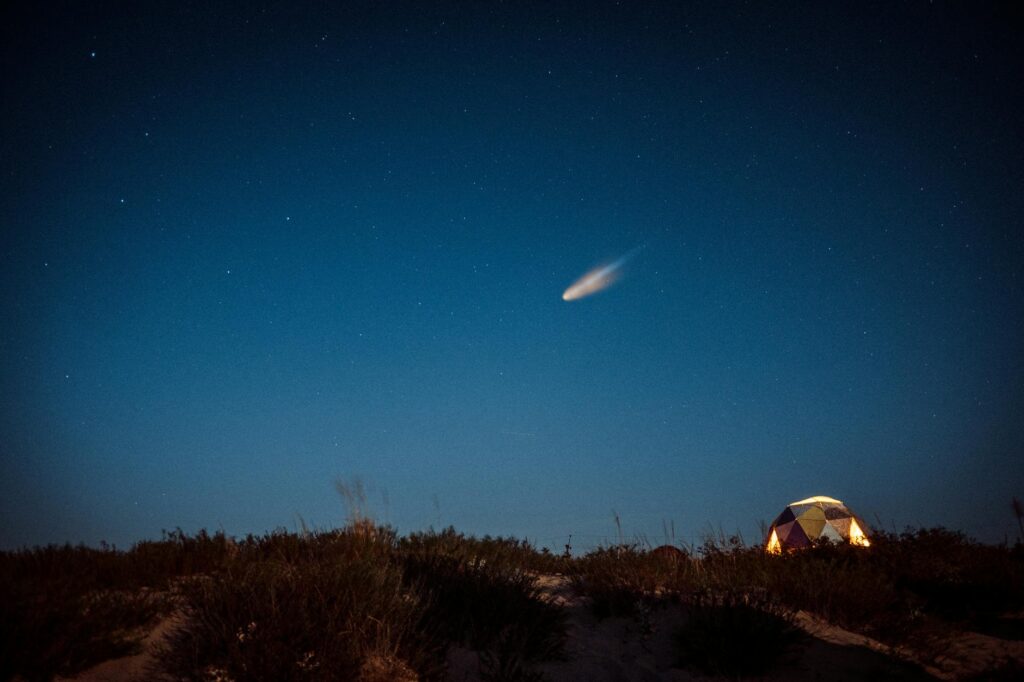
When a meteoroid enters Earth’s atmosphere at high speed, friction with the air heats it intensely, causing it to glow. This luminous trail is what we call a meteor. Most meteors are brief flashes of light, but larger meteoroids can produce spectacular fireballs that are visible for many miles. The energy released by a meteor entering the atmosphere can be considerable, but typically, the object disintegrates long before reaching the ground.
The frequency of meteors is often associated with meteor showers — which occur when Earth passes through a stream of debris left behind by a comet or asteroid. Famous examples include the Perseids in August and the Geminids in December. These events offer a fantastic opportunity for skywatchers to witness numerous meteors in a single night, often providing a budget-friendly way to connect with the cosmos.
From Space Rock to Ground Truth: The Meteorit
If a meteoroid is large enough to withstand the intense heat and pressure of atmospheric entry and lands on Earth’s surface, it’s then called a meteorit. Here are the tangible pieces of space that we can find and study. Meteorites are incredibly valuable scientific tools, providing direct evidence about the formation of our solar system and the composition of celestial bodies. they’re a window into the universe’s past, dating back billions of years.
According to the National Aeronautics and Space Administration (NASA) (2023), meteorites are broadly classified into three main types: stony, iron, and stony-iron. Stony meteorites are the most common, resembling terrestrial rocks. Iron meteorites are composed primarily of iron and nickel, while stony-iron meteorites are a mix of both. Each type offers unique insights into its parent body.
Distinguishing Features: Identifying a Meteorit
Identifying a potential meteorit can be an exciting pursuit, but it requires careful observation. Several characteristics can help distinguish a meteorit from terrestrial rocks. One key feature is the presence of a fusion crust – a dark, glassy or rough outer layer formed by melting during atmospheric entry. This crust is often thin and can be absent on older, weathered meteorites.
Another important indicator is regmaglypts — which are thumbprint-like depressions on the surface, caused by ablation (the wearing away of material) during flight. Meteorites are also generally denser than most Earth rocks due to their metallic content. While many meteorites are magnetic, this isn’t a foolproof test as some terrestrial rocks are also magnetic. A simple magnet test is still a good first step for aspiring meteorite hunters.
| Characteristic | Meteorit | Terrestrial Rock |
|---|---|---|
| Fusion Crust | Often present (dark, glassy/rough) | Absent |
| Density | Generally high | Variable, often lower |
| Magnetism | Often attracted to a magnet | Variable (some are magnetic) |
| Shape | Often irregular with regmaglypts | Variable, can be rounded or angular |
Practical Tips for the Aspiring Collector
For those interested in acquiring a piece of the cosmos, market and ethical considerations is vital. The cost of meteorites can vary wildly, depending on rarity, size, type, and provenance. Common chondrites, for instance, might be relatively affordable, while rare lunar or Martian meteorites can fetch astronomical prices, sometimes thousands of dollars per gram. According to the Bulletin of the American Meteorological Society (2021), verified meteorites hold significant scientific value — which contributes to their market price.
When looking to buy a meteorit, always seek reputable dealers. The market, unfortunately, has its share of fakes. Look for sellers who provide documentation, including classification reports from recognized institutions like the Meteoritical Society. Buying from established dealers like the F.A.R. Laboratories or inquiring through university geology departments can provide a safer buying experience. Always be wary of deals that seem too good to be true.
Budget-conscious collectors might focus on more common types of meteorites or smaller fragments. Even a small chondrite piece can be a fascinating addition to a collection. Alternatively, consider attending public lectures or visiting museums with meteorite exhibits—many offer opportunities to see these incredible objects without a significant financial outlay. The Natural History Museum in London, for example, has an extensive collection available for public viewing.
Meteoroid vs. Meteorit: A Summary for Clarity
To recap, the distinction is straightforward: a meteoroid is in space, a meteor is the light show in the atmosphere, and a meteorit is what lands on the ground. This simple classification helps scientists and enthusiasts alike track and understand these visitors from beyond Earth. The value of a meteorit isn’t just monetary. it’s in the scientific knowledge it holds.
Frequently Asked Questions
what’s the primary difference between a meteorit and a meteoroid?
The primary difference is location and survival. A meteoroid exists in outer space. If it enters Earth’s atmosphere and survives the journey to land on the surface, it’s then classified as a meteorit. The visible streak of light it creates during atmospheric entry is called a meteor.
Are meteorites valuable?
Yes, meteorites can be very valuable, both scientifically and monetarily. Their value depends on factors like rarity, type, size, and provenance. Common types might be affordable for collectors, while rare meteorites from the Moon or Mars can cost thousands of dollars per gram.
Can I find a meteorit in my backyard?
While it’s unlikely, it’s not impossible. Meteorites can land anywhere on Earth. However, finding one requires luck, knowledge of what to look for (like a fusion crust or regmaglypts), and often, searching in areas with less terrestrial rock contamination, such as deserts or plowed fields.
How fast do meteoroids travel?
Meteoroids travel at extremely high speeds. Their speeds vary depending on their origin and trajectory, but they typically enter Earth’s atmosphere at speeds ranging from 11 to 72 kilometers per second (approximately 25,000 to 160,000 miles per hour).
What are the main types of meteorites?
Meteorites are generally classified into three main types: stony meteorites (the most common), iron meteorites (made of iron and nickel alloys), and stony-iron meteorites (a mix of stony material and metal alloys).
Conclusion: Appreciating Our Cosmic Visitors
difference between a meteorit and a meteoroid enriches our appreciation for the universe. These celestial travelers offer tangible links to the formation of our solar system and the vastness of space. Whether you’re observing a meteor shower or considering the acquisition of a genuine meteorit, remember the incredible journey these objects have undertaken. For collectors, due diligence and reputable sources are really important to ensure you’re acquiring a genuine piece of cosmic history, making informed decisions that align with both your budget and your passion for astronomy.
Editorial Note: This article was researched and written by the Higher Intentions editorial team. We fact-check our content and update it regularly. For questions or corrections, contact us.